Classified Waters: How Cold War Secrecy Quietly Shaped the Clyde's Modern Waterfront
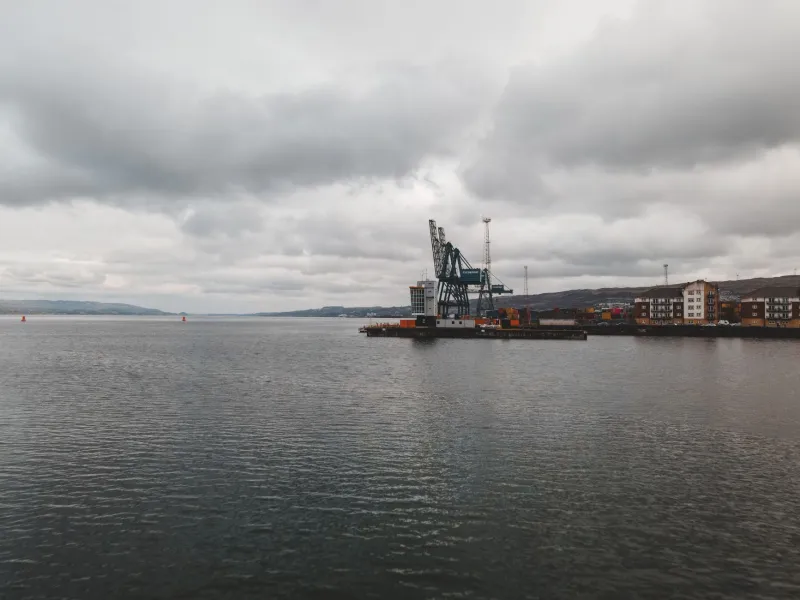
For the casual visitor strolling along the Clyde today, the gleaming waterfront developments of Glasgow's south bank offer little indication of what once transpired in the yards and dry docks that preceded them. The restaurants, media offices, and cultural venues that now occupy this stretch of riverfront were built upon ground that, within living memory, carried a level of strategic sensitivity that would have surprised most Glaswegians. The Cold War, it turns out, did not merely pass through Clydeside — it settled there, quietly and deliberately, for the better part of four decades.
A River Trusted with National Secrets
The Clyde's involvement in Britain's nuclear deterrent programme is perhaps its least examined industrial legacy. While the presence of the Faslane naval base at Gare Loch remains well documented, the role played by Glasgow's commercial yards in constructing, maintaining, and modifying vessels associated with classified defence programmes has received considerably less public scrutiny. Documents released under the thirty-year rule and subsequent Freedom of Information requests have begun to illuminate the extent to which certain Clydeside facilities were integrated into national security infrastructure during the 1950s, 1960s, and 1970s.
Scott Lithgow at Port Glasgow, Yarrow Shipbuilders at Scotstoun, and the Fairfield yard at Govan each held Ministry of Defence contracts that extended well beyond the publicly acknowledged frigate and destroyer programmes. According to naval historians who have examined the newly accessible Admiralty correspondence held at the National Records of Scotland, specific dry dock configurations at several yards were modified to accommodate vessels whose specifications remained classified for decades after their construction.
"What we are beginning to understand," notes one maritime heritage researcher who has spent several years cross-referencing declassified procurement records with surviving yard plans, "is that the physical geography of certain Clyde installations was shaped not by commercial logic alone, but by strategic requirements that could never be publicly stated at the time."
The Silence That Shaped the Skyline
This enforced confidentiality had consequences that extended far beyond the yards themselves. Workers employed on classified contracts signed the Official Secrets Act as a condition of their engagement, a practice that remained common well into the 1980s. For many families, this meant that fathers and grandfathers carried detailed knowledge of their working lives to the grave, leaving gaps in the oral histories that community heritage projects have subsequently struggled to fill.
The implications for modern heritage interpretation are considerable. Several sites now earmarked for visitor development along the lower Clyde contain structures whose wartime and Cold War functions remain only partially understood. The Titan Crane at Clydebank, now one of the waterfront's most celebrated heritage landmarks, has been thoroughly contextualised within the framework of commercial shipbuilding. Yet the yards it served were, at various points, engaged in work that the public record still does not fully describe.
Heritage planners working on the ongoing Clyde Gateway regeneration project have, in recent years, begun to engage directly with this ambiguity. Rather than presenting the river's Cold War chapter as a footnote, a small but growing number of interpretation strategies are incorporating the theme of official secrecy itself as a meaningful layer of the waterfront's story.
Declassification and the New Heritage Conversation
The gradual release of Admiralty and Ministry of Defence records has created an unexpected resource for heritage bodies. The Scottish Maritime Museum, working alongside academic partners at the University of Glasgow and the University of Strathclyde, has initiated a programme of archival research specifically aimed at recovering the defence-related history of Clyde yards before that knowledge is lost entirely.
This work is not without its sensitivities. Some material remains subject to continued classification, and the families of former yard workers have occasionally found that the documents now entering the public domain confirm long-held suspicions about the nature of the work their relatives undertook. In several instances, this has proved emotionally significant — a belated acknowledgement of work that could not, at the time, be spoken of with any pride or specificity.
For Glasgow City Heritage Trust and the various bodies responsible for the designation of heritage assets along the waterfront, the emerging picture creates both opportunities and obligations. The physical remains of Cold War-era modifications to yard infrastructure — reinforced dock walls, unusual drainage configurations, security checkpoint foundations — represent a category of heritage evidence that conventional industrial archaeology frameworks were not designed to accommodate.
Regeneration Built on Restricted Foundations
Perhaps the most striking revelation to emerge from recent archival work concerns the degree to which Cold War-era land use decisions directly influenced the pattern of post-industrial regeneration. Certain parcels of Clyde waterfront remained in Ministry of Defence ownership, or under informal security restrictions, long after the yards themselves had closed. This delayed their release for commercial development, inadvertently preserving fabric that might otherwise have been cleared during the aggressive redevelopment programmes of the 1980s and 1990s.
In practical terms, this means that some of the most historically significant surviving industrial structures along the Clyde owe their continued existence not to any heritage protection measure, but to the bureaucratic inertia of the defence establishment. It is an irony that heritage professionals are only now beginning to appreciate fully.
The Pacific Quay development, home to BBC Scotland and the Glasgow Science Centre, occupies a site whose pre-regeneration history is more layered than its gleaming contemporary appearance suggests. Planning documents from the late 1990s make reference to ground investigation requirements that go beyond standard contamination surveys, pointing to a more complex history of site use that has not been fully incorporated into the public narrative of the area's transformation.
Towards a More Complete Story
The challenge for Clyde waterfront heritage in the coming years will be to integrate this classified chapter into a coherent and accessible public narrative. The Cold War is not, on the face of it, an easy sell for heritage tourism. It lacks the visceral drama of the shipbuilding era's great launches, and its most significant events took place behind closed doors, in restricted areas, and in documents that still carry redaction marks.
Yet there is a compelling story here — one about the relationship between state power and working communities, about the obligations of secrecy and the cost they imposed on ordinary lives, and about the way in which national strategic priorities quietly determined the shape of a city's future. As the Clyde continues to reinvent itself as a destination, the river's Cold War inheritance deserves a place in that conversation. The documents are emerging. The structures, in some cases, still stand. The witnesses, where they remain, are finally being invited to speak.