When the Workers Became the Witnesses: Clydeside's Living Historians Take Centre Stage
There is a particular kind of authority that no archive can replicate. It lives in the hands of a man who spent thirty years fitting boiler rooms aboard vessels destined for ports he would never visit. It resides in the memory of a woman who watched her father leave for the yard before dawn every morning of her childhood. And it speaks, quietly but unmistakably, through the guided tours, museum galleries, and community oral history projects that are increasingly drawing on the testimony of those who did not merely witness Clydeside's industrial age — they built it.
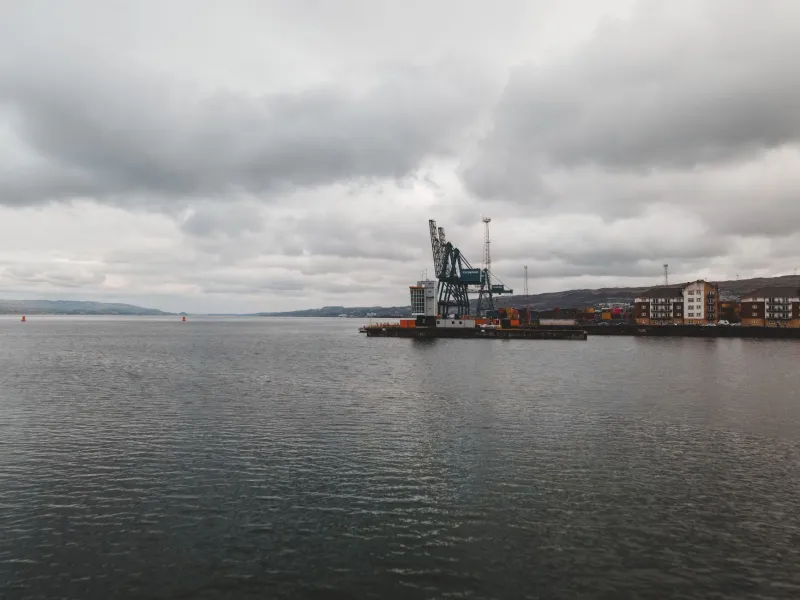
Across the length of the Clyde waterfront, a remarkable transition is under way. Former shipyard workers, retired engineers, and ex-dockworkers who once formed the invisible backbone of one of the world's great industrial corridors are now its most compelling interpreters. In doing so, they are reshaping not only what visitors learn about the river, but how they feel about it.
From the Yard to the Gallery Floor
For many of these individuals, the move into heritage work was neither planned nor obvious. Some were approached by local museums seeking technical expertise; others found their way into community history groups almost by accident, drawn in by a desire to correct what they saw as oversimplifications in how the shipbuilding era was being portrayed. A few simply turned up at open days and never quite left.
At the Scottish Maritime Museum in Irvine and at Riverside Museum in Glasgow, the contribution of former industry workers to interpretive programmes has grown steadily over recent years. Their involvement ranges from advising on object labelling and display content to leading specialist tours that no professional historian, however diligently trained, could replicate with equivalent authenticity.
One retired plater who worked at Govan's yards through the 1970s and into the early 1980s has described the experience of guiding visitors through a reconstructed shipyard workspace as unexpectedly emotional. 'You point at a rivet gun behind glass and you're back there,' he has noted in interviews with local heritage organisations. 'You can explain what it weighed, what it did to your wrists, what the noise did to your hearing. That's not in any textbook.'
This quality of embodied knowledge — what might be called experiential precision — is precisely what heritage professionals have come to value so highly. It transforms an exhibit from a static object into a portal.
Oral History and the Race Against Time
Beyond the museum floor, oral history projects along the Clyde have taken on an increasing sense of urgency. The generation of workers who experienced the apex and then the devastating contraction of Clydeside's shipbuilding industry — from the post-war boom years through the closures of the 1970s and 1980s — is ageing. The youngest among them are now in their late sixties; many are considerably older. The window for capturing their testimony in depth is narrowing with each passing year.
Organisations including the Clyde Built Film Archive and various community heritage initiatives have been recording interviews, collecting personal photographs, and documenting technical vocabularies that exist nowhere in formal records. The Scots dialect terms used on the shop floor, the informal hierarchies of the yard, the unwritten customs that governed daily working life — these are the kinds of details that disappear entirely when the last person who knew them is gone.
What emerges from these recordings is frequently surprising in its texture. Workers speak not only of labour and hardship but of pride, camaraderie, dark humour, and a profound attachment to the river itself. The Clyde, in their accounts, is not merely a backdrop to industry — it is a character with its own temperament, its own seasonal moods, its own relationship with the communities that lined its banks.
Reshaping the Visitor Experience
The influence of these living historians is perhaps most tangible in the guided walk sector, where former industry workers have begun to lead tours through areas they once knew as active yards. Stretches of the south bank in Govan, the former John Brown's site at Clydebank, and the regenerated waterfront at Greenock have all hosted tours in which the guide's personal connection to the landscape transforms the experience entirely.
Visitors on such tours frequently report being struck by the disjunction between the physical silence of the current waterfront and the sonic intensity described by their guide. To stand on a quayside now given over to residential development and hear a former welder describe the noise, the heat, and the sheer human density of the yard at full production is to encounter a kind of double vision — the present and the past overlaid on one another in ways that no interpretive panel can achieve.
This capacity to animate place is something that heritage tourism professionals across Scotland have noted with considerable interest. In an era when visitor expectations are increasingly shaped by immersive and experiential formats, the testimony of someone who was actually there carries a competitive value that is difficult to overstate.
The Challenge of Succession
Yet for all the richness of what these individuals bring, the heritage sector faces a structural challenge that honest reflection cannot avoid. The generation of workers with direct experience of Clydeside's industrial prime has no natural successor. Their children and grandchildren carry inherited memories and family stories, but not the embodied knowledge of the yard itself. When the last riveter who remembers the launch of a great vessel is gone, a particular form of knowing goes with them.
The response to this challenge has taken several forms. Some projects have focused on the intensive documentation of testimony through high-quality audio and video recording, ensuring that voices and faces are preserved even when the individuals themselves are no longer present to speak. Others have invested in training younger community historians to carry forward the interpretive frameworks established by their older counterparts, even if the lived experience cannot be transferred.
There is also a growing conversation about the role of digital tools — from interactive oral history platforms to augmented reality applications that might one day allow visitors to hear a shipyard worker's account while standing on the very ground where he once worked. Whether technology can adequately substitute for the human presence of a living witness remains an open and somewhat uncomfortable question.
A River That Remembers Through Its People
What the Clyde's emerging cohort of worker-historians ultimately offers is something that transcends the conventional boundaries of heritage interpretation. They are not simply sources of information; they are custodians of a way of understanding the world — one shaped by collective labour, industrial discipline, and an intimate relationship with a river that was, for much of the twentieth century, among the most productive stretches of water on earth.
To spend time with one of these individuals — whether in a museum gallery, on a guided walk, or simply in conversation over a cup of tea in a community centre — is to encounter history not as a finished story but as a living one, still being told by those who were present for its most consequential chapters.
The Clyde has always told Scotland's story through the things built upon its banks and launched upon its waters. It is telling that story now through the people who did the building — and the heritage of this river will be immeasurably poorer when their voices are finally stilled.