Steel, Software, and the Spirit of the Clyde: How Glasgow's Industrial Past Is Fuelling a New Wave of Innovation
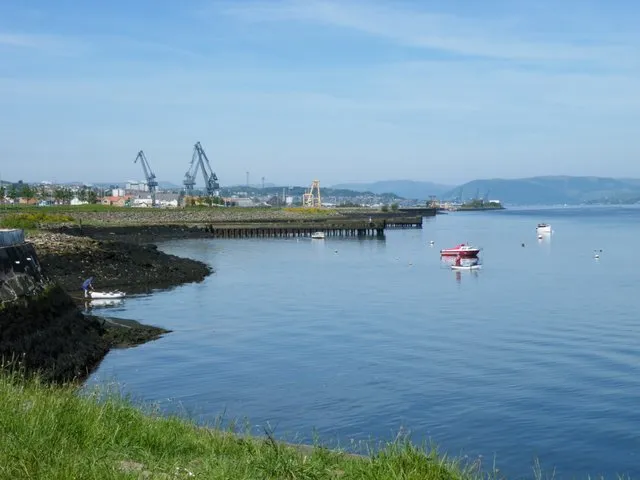
Photo: Thomas Nugent, CC BY-SA 2.0, via Wikimedia Commons
There is a particular quality to the light on the Clyde in the early morning — grey, resolute, and utterly unromantic in the way that only genuinely working rivers can be. For more than a century, that light fell on the most productive stretch of industrial waterway in the world. Today, it falls on converted engine sheds, repurposed dock offices, and gleaming new build campuses where software engineers, designers, and life sciences researchers have taken up residence. The transformation is striking, but those who know the river well will tell you it is not quite as dramatic a departure as it first appears.
The Clyde has always been a place where ambition meets engineering. What has changed is the nature of the tools.
A Legacy Cast in Iron
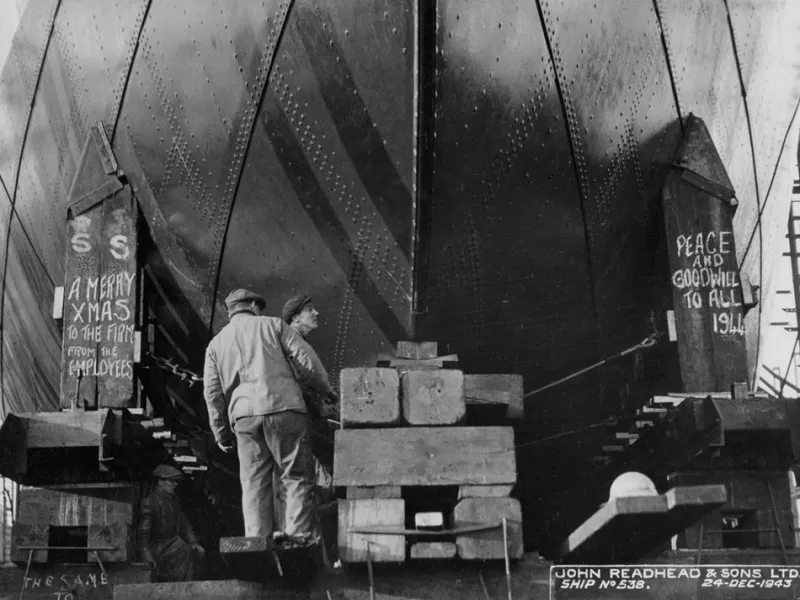
At its peak in the early twentieth century, the Clyde basin was responsible for producing nearly a fifth of the world's entire shipping tonnage. The yards at Govan, Fairfield, John Brown's at Clydebank, and a dozen others between them launched vessels that defined an era — ocean liners, warships, cargo carriers, and passenger ferries that carried Scottish craftsmanship to every corner of the globe. The Queen Elizabeth 2, launched at Clydebank in 1967, remains perhaps the most celebrated single product of that tradition: a vessel so finely constructed that her name is still invoked as a byword for excellence in manufacturing.
The decline of heavy industry along the Clyde from the 1970s onwards was painful and protracted. Whole communities lost their economic foundations almost overnight. Yet the physical infrastructure of that era — the dry docks, the engine shops, the bonded warehouses, the workers' tenements — remained, and it is precisely these structures that are now providing the architectural bones of Glasgow's new economy.
Govan: From Drydocks to Digital
Perhaps nowhere illustrates this continuity more vividly than Govan. Once the beating heart of the Clyde's shipbuilding industry, the area has in recent years attracted significant investment in creative and technology-focused enterprise. The Fairfield Heritage building, part of the former Govan Shipbuilders complex, now operates as a heritage and events venue, and the broader regeneration of the surrounding streetscape has drawn independent businesses, studios, and community enterprises in considerable numbers.
Several technology founders who have established operations in the area speak openly about the influence of the location's history on their working culture. One software development firm, founded in 2018 and now employing over forty staff, occupies a refurbished warehouse building within sight of the surviving dry docks. Its founder, who grew up in Govan and whose grandfather worked as a plater at the yard, describes the choice of location as entirely deliberate. "There's a particular kind of problem-solving that comes from this place," she explained during a recent public talk on Glasgow's innovation economy. "The shipbuilders didn't have the luxury of failure. They built things that had to work in the North Atlantic. That mentality is still here."
The Clyde Mission and the Architecture of Ambition
The broader regeneration of the waterfront has been shaped in part by the Clyde Mission, the Scottish Government's strategic framework for unlocking the economic and environmental potential of the river corridor. Running from the tidal weir at Glasgow Green to the Firth of Clyde, this initiative encompasses dozens of development sites and has helped catalyse investment in areas that remained derelict for decades following deindustrialisation.
Among the most visible results of this effort is the continued development of the Glasgow Harbour and Pacific Quay districts, where the BBC Scotland headquarters, the Glasgow Science Centre, and the Scottish Exhibition and Conference Centre now anchor a mixed-use waterfront that attracts hundreds of thousands of visitors annually. The juxtaposition is deliberate: the Armadillo concert venue and the SSE Hydro arena sit within a short walk of the Finnieston Crane, the last surviving giant cantilever crane on the river, which has become something of an unofficial emblem of the city's dual identity — proud of its industrial heritage, confident in its creative future.
Heritage Trails: Walking the Transformation
For visitors wishing to experience this layering of past and present firsthand, the Clyde Waterfront offers several well-documented walking routes that trace the river's industrial history while acknowledging its contemporary character.
The Govan Heritage Trail takes walkers through the surviving built fabric of the shipbuilding era, including the Govan Old Parish Church — which contains a remarkable collection of early medieval carved stones — and the Pearce Institute, a magnificent Edwardian philanthropic building constructed with funds donated by the shipbuilding magnate Sir William Pearce. Interpretive panels along the route contextualise the industrial landscape and point visitors towards surviving structures of significance.
Further east, the Merchant City and Briggait area connects Glasgow's mercantile past with its present-day cultural vitality. The Briggait itself, a Victorian fish market converted into a creative industries hub, is an exemplary case of adaptive reuse: its ornate ironwork and vaulted roof now shelter artists' studios, event spaces, and a café that serves as an informal meeting point for the local creative community.
The Riverside Museum, designed by Zaha Hadid and opened in 2011 adjacent to the tall ship Glenlee, provides perhaps the most comprehensive single introduction to Glasgow's transport and industrial heritage. Its collection spans centuries of Clyde-related manufacturing and includes an extraordinary array of vehicles, locomotives, and ship models that speak directly to the scale and ambition of the region's industrial output.
An Inheritance Worth Claiming
What distinguishes Glasgow's approach to its industrial heritage from simple nostalgia is the insistence on utility. The buildings being repurposed are not preserved as monuments to a vanished way of life; they are being put back to work. The values that made the Clyde yards world-renowned — precision, resilience, collective endeavour, and an unflinching commitment to quality — are spoken of not as historical curiosities but as active ingredients in the city's contemporary economic culture.
For visitors to the waterfront, this creates an unusually rich experience. Here, the past and the present do not merely coexist; they actively inform one another. To walk from a Victorian engine shop now housing a technology accelerator to a dry dock where the outlines of great ships can still be traced in the stonework is to understand something essential about how places carry their history forward.
The Clyde, as it has always done, is still telling Scotland's story. The vocabulary has changed. The ambition has not.