From Black Water to Living River: The Ecological Rebirth of the Clyde
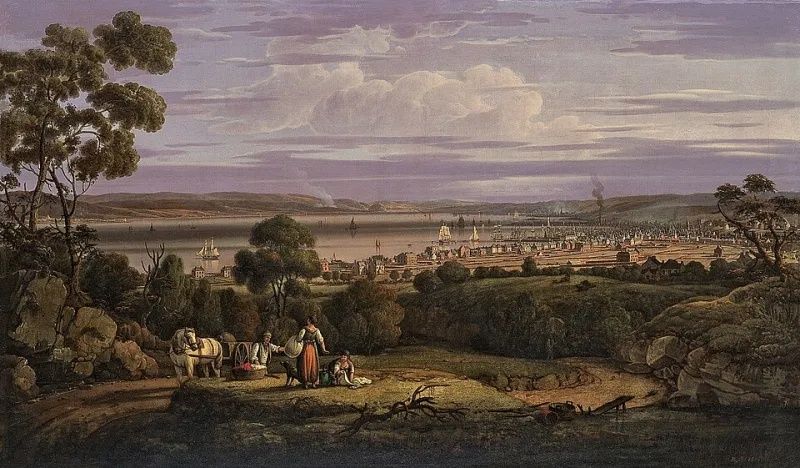
Photo: Robert Salmon, Public domain, via Wikimedia Commons
There is a particular kind of astonishment reserved for those who learn that salmon have returned to the River Clyde. For generations, the very idea would have seemed fanciful — a romantic notion wholly at odds with the industrial reality of a waterway that once ran dark with effluent, heavy metals, and the accumulated discharge of one of the world's most productive manufacturing corridors. Yet the evidence is undeniable. Atlantic salmon are moving through stretches of the river that, within living memory, could not sustain so much as a stickleback. The Clyde, it seems, is writing a new chapter — and that chapter is one of the most compelling environmental stories in modern Scotland.
A River Brought Low
To appreciate the scale of what is happening today, one must first reckon with what was lost. Prior to industrialisation, the Clyde was a richly productive river system. Historical records — estate accounts, ecclesiastical registers, and the observations of early naturalists — describe a waterway teeming with salmon, sea trout, lampreys, and freshwater pearl mussels. Riparian wetlands fringed its banks, providing habitat for wading birds and supporting communities that depended upon the river for food, transport, and trade.
The industrial revolution changed all of that with startling speed. By the mid-nineteenth century, the demands of shipbuilding, textiles, chemical manufacturing, and coal processing had fundamentally altered the river's chemistry. Oxygen levels plummeted. Migratory fish, unable to navigate the toxic reaches of the lower Clyde, vanished from stretches they had occupied for millennia. The river became, in the words of one Victorian public health inspector, 'a moving sewer of considerable ambition.' It was a designation that would endure for the better part of a century.
Reading the Historical Record
What makes the contemporary restoration effort genuinely distinctive is the degree to which conservationists and ecologists have turned to historical sources for guidance. Rather than working solely from recent baseline data — which would inevitably reflect a river already degraded — researchers have been mining estate records, burgh archives, and the writings of early naturalists to reconstruct a picture of the Clyde's pre-industrial ecology.
This approach, sometimes described as historical ecology, has yielded surprising insights. Old salmon fishing records from riparian estates, for instance, have helped scientists identify which tributaries once held significant spawning populations — information that now informs decisions about where to focus habitat restoration work. Similarly, accounts of wetland extents from eighteenth-century land surveys are being used to guide the re-establishment of reed beds and floodplain habitats that were drained or built over during the industrial era.
The result is a restoration strategy that is, in the truest sense, heritage-informed. The past is not merely a backdrop to this work; it is an active participant in shaping its direction.
Signs of Recovery
The improvements now visible along the Clyde are the product of several decades of sustained effort. Legislative changes — most notably the tightening of effluent regulations from the 1970s onwards — provided the essential precondition for recovery by reducing the volume of harmful discharges entering the river. Water quality has improved markedly, and dissolved oxygen levels in the lower reaches have risen to the point where fish passage is once again biologically feasible.
Conservation bodies, local authorities, and community groups have built upon this foundation with more targeted interventions. Fish passes have been installed at weirs that previously blocked upstream migration. Riverbank planting schemes have stabilised eroded sections and restored the shading that native species require. Wetland creation projects at sites along the Clyde Valley have re-established habitats that provide nursery grounds for invertebrates and refuge for overwintering wildfowl.
The results are measurable. Salmon and sea trout counts at monitoring stations have risen steadily. Otters, absent from much of the river for decades, have been recorded at multiple locations. Populations of water voles — a species under severe pressure across the UK — have been identified in restored riparian margins. The river is not yet what it once was, but the trajectory is clear and the momentum is genuine.
Where Heritage and Ecology Converge
For visitors to the Clyde waterfront, the ecological story and the heritage story are increasingly difficult to separate — and that, in many respects, is precisely the point. The same landscape that bears the marks of industrial endeavour is also the landscape in which nature is reasserting itself. Ruined quaysides are colonised by wildflowers. Former shipyard waterfronts have become gathering points for cormorants and herons. The river that carried the weight of empire is now carrying something altogether more hopeful.
Several visitor experiences along the Clyde explicitly draw these threads together. The Clyde Walkway, which stretches from Glasgow Green to the Falls of Clyde near Lanark, offers a journey through both industrial archaeology and recovering natural habitats. Interpretive panels at various points along the route explain the ecological history of the river alongside its manufacturing legacy, inviting walkers to consider both dimensions simultaneously.
At the Falls of Clyde itself — a Site of Special Scientific Interest managed by the Scottish Wildlife Trust — visitors can observe salmon leaping during the autumn run, a spectacle that connects the present moment directly to the pre-industrial river described in those historical records. It is a powerful experience, and one that is becoming more widely known as the Clyde's ecological reputation continues to improve.
The Work That Remains
Honesty demands an acknowledgement that the restoration of the Clyde is far from complete. Significant challenges persist. Diffuse agricultural pollution continues to affect water quality in certain tributaries. Legacy contamination from industrial sites remains a concern in some areas. The freshwater pearl mussel, once abundant in the upper Clyde system, remains critically endangered, and its recovery will require sustained and carefully managed intervention over many years.
Climate change introduces further uncertainty. Altered rainfall patterns, higher water temperatures, and more frequent flood events all carry implications for a river system still in the early stages of ecological recovery. Conservationists are candid about these pressures, and the most thoughtful restoration strategies are now explicitly designed with climate adaptation in mind.
Nevertheless, the overall picture is one of cautious but well-founded optimism. The Clyde has demonstrated a capacity for recovery that would have seemed implausible to those who knew the river at its most degraded. That recovery is not accidental — it is the product of deliberate policy, sustained community effort, and a willingness to learn from the river's own history.
An Invitation to Bear Witness
For those who care about Scotland's environmental future, and who find meaning in the intersection of natural and industrial heritage, the Clyde offers something rare: a living demonstration that rivers, like communities, can regenerate. The ecological transformation underway here is not a footnote to the waterfront's heritage story — it is, increasingly, central to it.
Visitors who take the time to walk the river's banks, to pause at a monitoring station, or to watch an otter working the shallows of a restored wetland are not merely sightseeing. They are witnessing a process of renewal that connects Scotland's industrial past to its environmental ambitions — a story that is still being written, one returning salmon at a time.