From Rust to Revenue: Can Heritage Tourism Deliver Lasting Prosperity Along the Clyde?
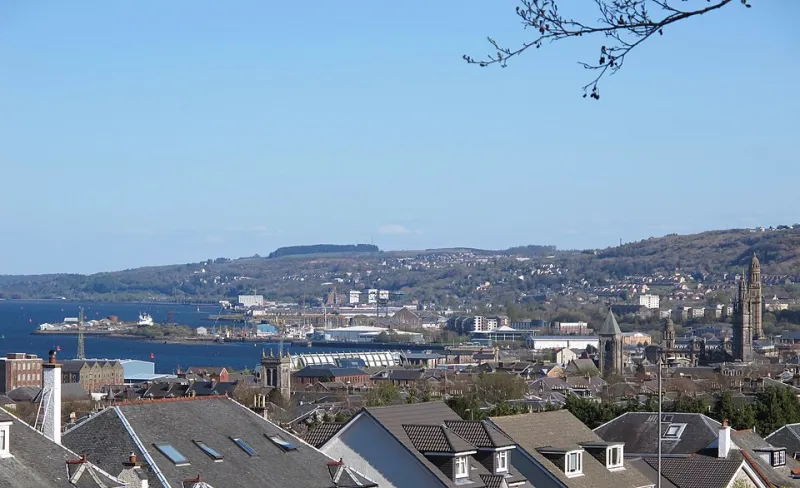
Photo: dave souza, CC BY-SA 4.0, via Wikimedia Commons
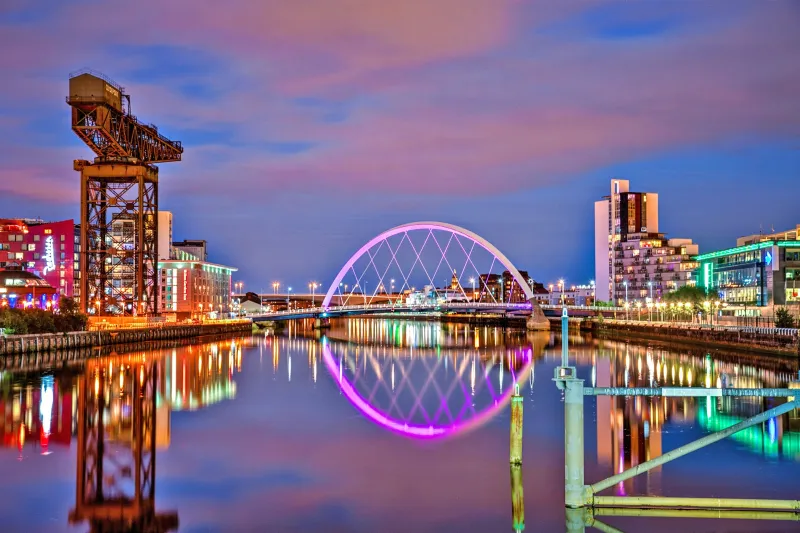
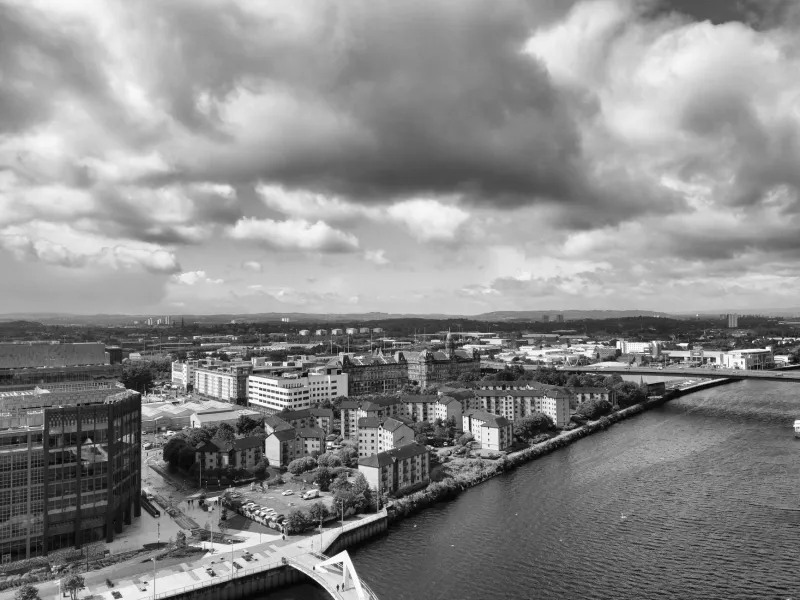
Stand at the edge of the Broomielaw on a clear morning and the view tells two stories simultaneously. To the west, glass-fronted developments and refurbished quayside buildings speak of a city confidently reinventing itself. To the north and south, just a short walk from the gleaming waterfront, neighbourhoods that bore the full weight of deindustrialisation continue to wrestle with unemployment, poor health outcomes, and a persistent sense of having been left behind. The Clyde's second act is well underway — but the audience, it seems, is not evenly distributed.
Heritage tourism along the Clyde has grown substantially over the past two decades. The combination of the Riverside Museum, the SS Nomadic's sister vessel Glenlee berthed at the Tall Ship, the Titan Crane at Clydebank, and a constellation of smaller heritage initiatives has helped reframe the river not as a wound in the city's side but as its defining cultural asset. VisitScotland figures consistently identify Glasgow's industrial heritage as a primary draw for domestic and international visitors alike, and the Clyde corridor sits at the heart of that narrative.
The Numbers Behind the Narrative
The economic case for heritage-led regeneration is, on its face, compelling. A 2022 report commissioned by Glasgow City Region estimated that cultural and heritage tourism contributed in excess of £700 million annually to the wider economy, supporting tens of thousands of jobs across hospitality, retail, transport, and the creative industries. The Riverside Museum alone attracted over 800,000 visitors in the year prior to the pandemic, making it one of Scotland's most visited attractions and a genuine anchor for the waterfront's broader appeal.
Inward investment has followed visitor interest. Several formerly derelict stretches of the south bank have been acquired by developers who cite the heritage character of the area as central to their commercial proposition. Converted granaries, repurposed engine sheds, and reimagined dock buildings now house restaurants, co-working spaces, independent retailers, and boutique hotels. The language of heritage permeates planning applications, marketing brochures, and regeneration frameworks in equal measure.
Yet economists and community advocates are increasingly cautious about translating headline figures into claims of shared benefit. Aggregate tourism spend and gross development values tell us relatively little about where money ultimately flows, who holds equity in new enterprises, and whether the jobs created offer genuine economic security or predominantly low-wage, seasonal, and precarious employment.
Who Owns the Story — and the Land?
Among the more searching critiques of heritage-led regeneration is the observation that the story of working-class Clydeside is being packaged and sold in ways that generate profit for parties largely disconnected from that history. Several major waterfront developments have been financed by institutional investors and delivered by national or international development companies, with community benefit provisions that critics describe as modest relative to the scale of uplift captured.
"There's a real tension between celebrating the heritage of ordinary people and then building something that ordinary people can't afford to use," says one community development worker based in Govan, who asked not to be named. "The shipyard workers didn't build this city so that their grandchildren could work zero-hours contracts serving cocktails in a converted dock building."
That critique finds some sympathy even within the heritage sector itself. Several organisations involved in interpreting Clyde history have made explicit commitments to community co-production — ensuring that local voices shape how stories are told, rather than simply providing a backdrop for commercially driven storytelling. The Govan Heritage Trust, for instance, has worked with former shipyard workers and their families to develop oral history resources that remain freely accessible to residents, not merely to paying visitors.
Case Studies in Contrasting Outcomes
The picture is, in truth, more varied than either optimistic boosterism or sceptical critique allows. In Clydebank, the preservation and interpretation of the Titan Crane has become a genuine source of local pride, and the associated heritage trail has encouraged visitors to spend time — and money — in a town centre that had experienced severe retail decline. Local businesses along Dumbarton Road report a modest but meaningful increase in footfall attributable to heritage visitors, and the crane itself has become a symbol of civic identity that resonates across generations.
In contrast, some stretches of the Glasgow waterfront closer to the city centre have seen heritage branding serve primarily as a premium positioning tool for upmarket residential and commercial developments. Community consultation processes, whilst formally observed, have in several cases delivered outcomes that residents describe as predetermined. The affordable housing component of mixed-use schemes has repeatedly fallen short of targets, and the cultural programming that developers promised as part of planning consents has, in some instances, quietly diminished once planning permission was secured.
Small business operators present a similarly mixed picture. Independent café and gallery owners who have established themselves in heritage quarters describe genuine opportunities but also escalating rents, competition from larger operators with greater marketing resources, and a sense that the character that made their locations attractive is gradually being homogenised by commercial pressures.
Building a More Equitable Model
Those working at the intersection of heritage and community development argue that the fundamental question is not whether heritage tourism can generate economic value — it demonstrably can — but whether the institutional frameworks governing that generation are designed to distribute value equitably.
Community wealth building approaches, which have gained traction in parts of Scotland through initiatives such as the Preston Model and its Scottish adaptations, offer one potential framework. Under such models, public investment in heritage infrastructure is explicitly linked to procurement commitments that favour local suppliers, employment strategies that prioritise residents of adjacent communities, and ownership structures that keep a greater proportion of returns within the local economy.
Several heritage organisations on the Clyde are beginning to explore social enterprise models that combine earned income from tourism with community benefit objectives. The principle — that the river's story belongs to the people who lived it, and that any commercial value derived from that story should flow back towards them — is straightforward. The institutional and financial architecture required to deliver it consistently is considerably more complex.
A River Still in Negotiation
The Clyde has always been a site of negotiation — between labour and capital, between civic aspiration and commercial reality, between the city it was and the city it is becoming. Heritage tourism has added a new dimension to that negotiation, one in which the past itself becomes a resource whose value is contested.
There is nothing inherently problematic about a river that once built ships for the world now attracting visitors who wish to understand that history. The question is whether the communities whose forebears forged that history are participants in its economic future or merely its subject matter. On current evidence, the answer varies considerably depending on where you stand along the bank — and who, precisely, owns the ground beneath your feet.
The Clyde's second act is still being written. The most important decisions about its final shape are not yet made.