Lights, Camera, Clyde: How Scotland's Industrial Ruins Became One of Britain's Most Sought-After Backdrops
Photo: Thomas Nugent , CC BY-SA 2.0, via Wikimedia Commons
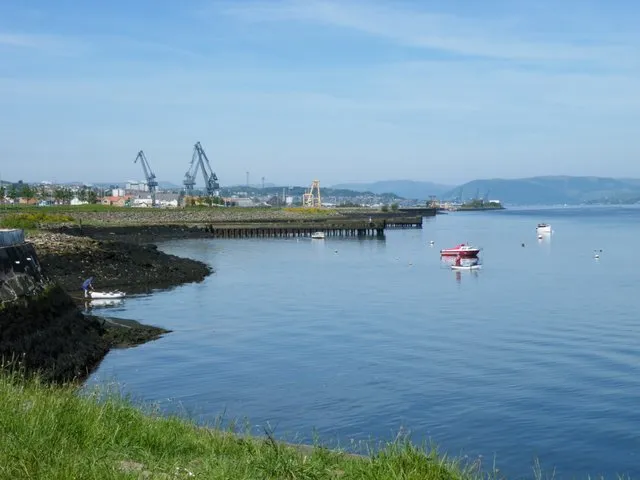
There is a particular quality to the light on the Clyde in the early morning — the way it catches rusted ironwork, falls across cracked concrete aprons, and illuminates the ghostly silhouettes of structures that once roared with the labour of thousands. It is a quality that cinematographers, artists, and creative directors have begun to recognise as something genuinely irreplaceable. Across the river's banks, from Govan to Greenock, the remnants of Scotland's industrial golden age are being quietly transformed into one of the country's most productive creative assets.
The shift has been gradual but unmistakable. Where planners once debated demolition and developers drew up schemes for riverside apartments, a growing number of productions, arts organisations, and entrepreneurs have arrived with a different proposition: that the visual and spatial character of these places is itself a resource worth preserving and exploiting.
A Natural Stage for Storytelling
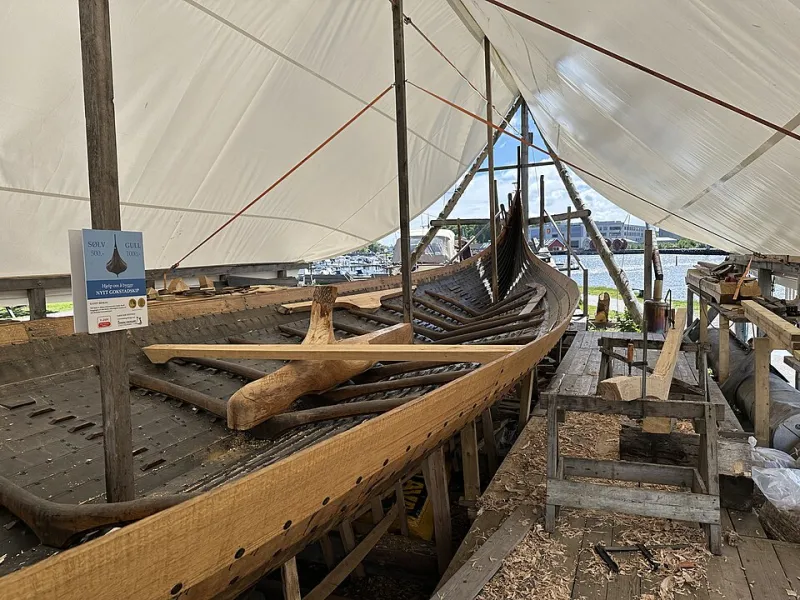
The appeal to the film and television industry is not difficult to understand. Clydeside's surviving industrial fabric offers something that purpose-built studio environments cannot easily replicate — authentic scale, material texture, and a sense of accumulated time. Expansive engine sheds, dry docks lined with barnacled timber, and cavernous warehouses whose brickwork carries the stains of a century's industry provide a visual language that speaks directly to period drama, action filmmaking, and documentary production alike.
Productions including Outlaw King, the Netflix historical epic, and sequences associated with major international franchises such as Avengers: Endgame have drawn upon Scottish industrial locations to stand in for everything from medieval battlefields to dystopian cityscapes. The Clyde's own built environment has featured in numerous Scottish-produced dramas, with location scouts regularly returning to sites along the river for their combination of dramatic atmosphere and relative accessibility from Glasgow city centre.
Screen Scotland, the national body responsible for supporting the country's screen industries, has noted a sustained increase in productions choosing Scottish locations over the past decade. The industrial heritage of the west of Scotland, and the Clyde corridor in particular, represents a distinctive strand within that broader appeal — one that no amount of digital effects can convincingly manufacture from scratch.
Warehouses Reborn as Studios and Galleries
Film production, however lucrative, is by its nature intermittent. The more durable transformation along stretches of the Clyde has come through the conversion of industrial buildings into permanent creative infrastructure. Former engineering works and bonded warehouses in areas such as Finnieston, Partick, and Port Glasgow have been adapted into recording studios, artist residencies, independent galleries, and shared workshop spaces.
This model of adaptive reuse has proved commercially viable precisely because it preserves rather than erases the character of the original structures. Exposed steelwork, original timber floors, and the sheer volume of former industrial interiors are treated not as problems to be resolved but as selling points. Creative tenants, many of them small businesses and sole traders working at the intersection of design, craft, and digital media, are drawn to spaces that carry a sense of provenance and authenticity.
The economic argument for this approach has strengthened considerably in recent years. A report published by Creative Scotland highlighted the disproportionate contribution made by creative industries clustered within post-industrial urban environments, noting that proximity to heritage fabric appeared to support both retention of established practitioners and attraction of incoming talent. For the Clyde corridor, which suffered severe economic contraction following the collapse of heavy industry in the latter twentieth century, this represents a meaningful avenue of regeneration.
Art in the Ruins
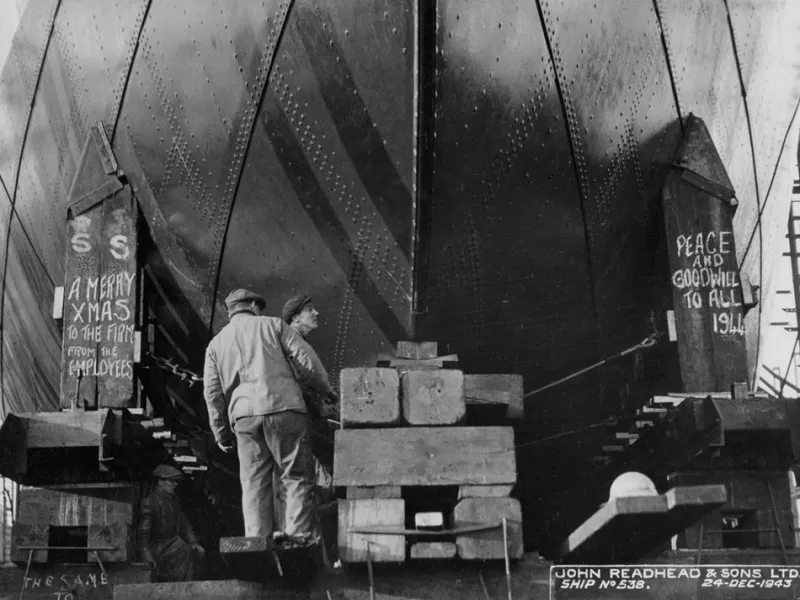
Beyond commercial development, the river's industrial landscape has become a canvas for large-scale public art and site-specific installation. Several significant commissions over the past two decades have engaged directly with the heritage of particular sites — responding to the history of specific yards, the stories of workers whose labour shaped these places, and the ecological transformation of the river itself since the decline of heavy industry.
These interventions occupy an interesting position within the broader heritage conversation. They neither restore nor demolish; instead, they add new layers of meaning to structures whose original function has long since ceased. Artists working in this mode frequently undertake substantial archival research, collaborating with local historians and former industry workers to ensure that their work is grounded in the specific human stories of each site.
The result, at its best, is a form of living heritage interpretation — one that reaches audiences who might not engage with more conventional museum or archival formats. The physical experience of encountering an artwork within the actual space it addresses carries an immediacy that no gallery reproduction can match.
Challenges of Stewardship
The picture is not without complications. Many of the most atmospherically compelling industrial structures along the Clyde remain in a precarious condition, their futures uncertain and their maintenance costs formidable. The very qualities that make them attractive to filmmakers and artists — the patina of neglect, the drama of partial collapse — are also the qualities that make them expensive and complex to manage responsibly.
Conservation bodies and local authorities face genuine tensions between enabling creative use and meeting their obligations to structural safety and heritage protection. Temporary uses, however beneficial in economic terms, do not in themselves resolve the long-term question of what these buildings are ultimately for, or who bears responsibility for their survival.
There is also a broader question about the nature of the heritage being celebrated. The industrial ruins of the Clyde are not neutral scenery; they are the physical residue of a particular economic and social history, one that involved both extraordinary collective achievement and considerable human hardship. Ensuring that their creative reuse engages honestly with that complexity, rather than aestheticising poverty and loss, remains an ongoing challenge for everyone working in this space.
A River Reinventing Itself
Nonetheless, what is happening along the Clyde represents something genuinely significant. The river's industrial legacy, for so long framed primarily as a problem of decline and redundancy, is being recognised as a resource — cultural, spatial, and economic — of considerable value. The skills of the screen industries, the ambitions of artists, and the entrepreneurial instincts of creative businesses are converging around a landscape that the river's own history created.
The Clyde has always been a place where things were made. The nature of what is being made here is changing, but the impulse — and the remarkable physical environment that sustains it — endures.