Adze, Caulking Iron, and Compass: The Craftspeople Keeping the Clyde's Maritime Soul Intact
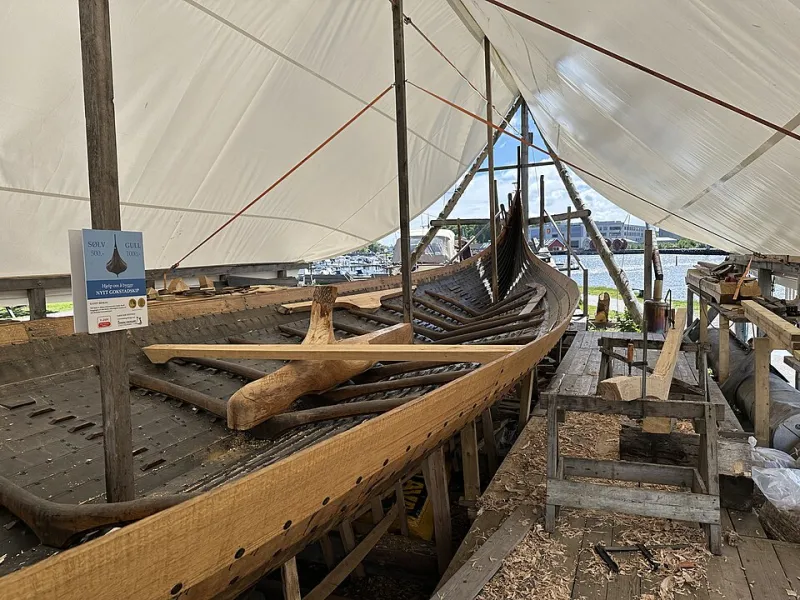
Photo: Wolfmann, CC BY-SA 4.0, via Wikimedia Commons
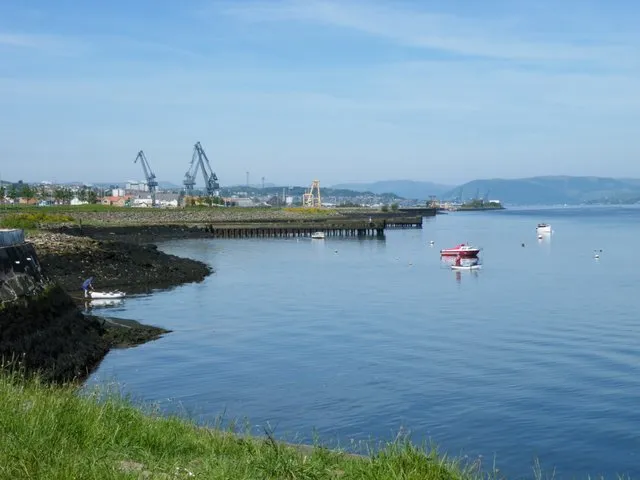
The smell of larch shavings and linseed oil greets you at the door of a low-roofed workshop on the south bank of the Clyde, somewhere between the grand ambitions of the regenerated waterfront and the quieter, less photographed stretches of river where working boats still tie up. Inside, a man in his late fifties is bent over the curved strake of a small sailing vessel, drawing a hand plane along its length with the unhurried precision of someone who has performed this action many thousands of times. He does not look up immediately. The work requires his full attention, and the work, he will explain presently, always comes first.
This is not a museum demonstration. The boat under construction is destined for the water, commissioned by a client who wanted something built the way such things were built before fibreglass and computer-aided design reshaped the industry. It will take the better part of a year to complete. The craftsman who is building it learned his trade from a man who learned his in the 1940s, in a yard that no longer exists, from masters whose own training stretched back further still.
A Chain of Knowledge
The transmission of traditional maritime craft skills operates differently from most forms of professional education. It cannot be adequately conveyed through manuals or instructional videos, though both exist. The knowledge lives, to a significant degree, in the hands — in the ability to read the grain of a timber, to feel when a joint is truly tight, to judge by eye and touch whether a hull form will move cleanly through the water. This is what craftspeople along the Clyde mean when they speak of skills being at risk: not that the information is lost, but that the embodied, practiced understanding may cease to be passed on.
Several individuals and small workshops scattered along the river and its tributaries are actively working to prevent that outcome. Their operations vary considerably in scale and focus. Some concentrate on new construction — building traditionally designed wooden sailing boats and small working craft to order. Others specialise in the painstaking restoration of historic vessels, returning century-old hulls to seaworthy condition through a combination of forensic investigation and practical ingenuity. A few do both, taking on whatever work allows them to keep the doors open and the tools in use.
The Boatbuilders
Wooden boatbuilding on the Clyde draws on a tradition that long predates the industrial era. Before the river became synonymous with iron and steel, its banks supported a thriving trade in timber-built fishing vessels, ferries, and small cargo craft. The clinker and carvel construction techniques employed in those earlier centuries are still in active use today among practitioners who regard them not as antiquarian curiosities but as genuinely effective methods for producing beautiful, durable boats.
One such practitioner, based in a converted farm building near the upper reaches of the river, has spent three decades building and repairing wooden craft of various types. His current project — a replica of a traditional Clyde fishing skiff — is being constructed using tools and methods that would have been familiar to any boatwright working on the river a hundred and fifty years ago. The adze, the drawknife, the caulking iron: each has its specific purpose and demands its own discipline to use well.
"People sometimes ask why you wouldn't just use modern materials and methods," he says, straightening up from the hull. "And the honest answer is that for some things, you might. But what we're doing here is also about understanding — about knowing how these boats were made, why they were made that way, and what that tells you about the people and the places that produced them. You can't get that from a technical drawing."
Restoration and the Art of Informed Repair
If new construction keeps traditional techniques alive, restoration work is often where the most intensive historical research is required. The craftspeople engaged in returning historic vessels to working condition must function simultaneously as practical shipwrights and as detectives — piecing together evidence from surviving timbers, archive photographs, builders' records, and the testimony of those who worked on or sailed particular boats.
A small specialist firm based near the lower Clyde has developed a particular expertise in the restoration of Victorian and Edwardian steam launches and sailing yachts, several of which have passed through their hands over the past fifteen years. The work is exacting and, by commercial standards, slow. A full restoration of a significant historic vessel may occupy the workshop for two or three years, requiring the sourcing of period-appropriate materials, the fabrication of fittings that are no longer manufactured, and the resolution of structural problems that have sometimes been building for decades.
The rewards, when a restored vessel returns to the water, are considerable — both for the craftspeople involved and for the broader heritage community. Several Clyde-built historic craft that have undergone sympathetic restoration now participate in classic boat gatherings and heritage events, serving as tangible, floating evidence of what the river's builders were capable of achieving.
Passing It On
The question of succession weighs on many of those working in this field. Traditional maritime craft skills require years of sustained practice to acquire, and the economic realities of small-scale boatbuilding and restoration are not straightforwardly attractive to young people considering their career options. Several practitioners have taken on apprentices in recent years, some through formal schemes and others through more informal arrangements, but the pipeline of incoming talent remains narrow.
Organisations including the Scottish Maritime Museum at Irvine have played an important role in supporting skills transmission, providing both workshop facilities and a context in which traditional crafts can be practised and demonstrated to the public. The museum's own restoration projects have offered working opportunities for trainees and volunteers, creating a bridge between heritage preservation and skills development that benefits both.
Community boatbuilding projects have emerged in several locations along the Clyde corridor, bringing together participants of varied backgrounds and experience levels around the shared discipline of constructing a wooden boat. These initiatives serve multiple purposes simultaneously — they produce real vessels, they transmit practical knowledge, and they create social bonds around a shared engagement with the river's heritage.
The River's Living Memory
What connects all of these individuals and enterprises, despite their differences in scale and approach, is a conviction that the Clyde's maritime heritage is not something that can be adequately preserved through documentation and display alone. The river's traditions live most fully when they are practised — when timber is being worked, caulking is being driven, and hulls are being lowered into the water that their builders knew.
The craftspeople of the contemporary Clyde are, in this sense, as much a part of the river's story as the great yards whose names still resonate in Scottish memory. They work in smaller spaces, with quieter tools, and their output will never be measured in the hundreds of thousands of tonnes that once slid down the launching ways of the Clyde. But the knowledge they hold, and the commitment with which they transmit it, ensures that something essential about what this river has always been — a place where skill, material, and water come together — continues to endure.