Keeping It in the Family: How Clydeside Communities Are Claiming Their Own Heritage
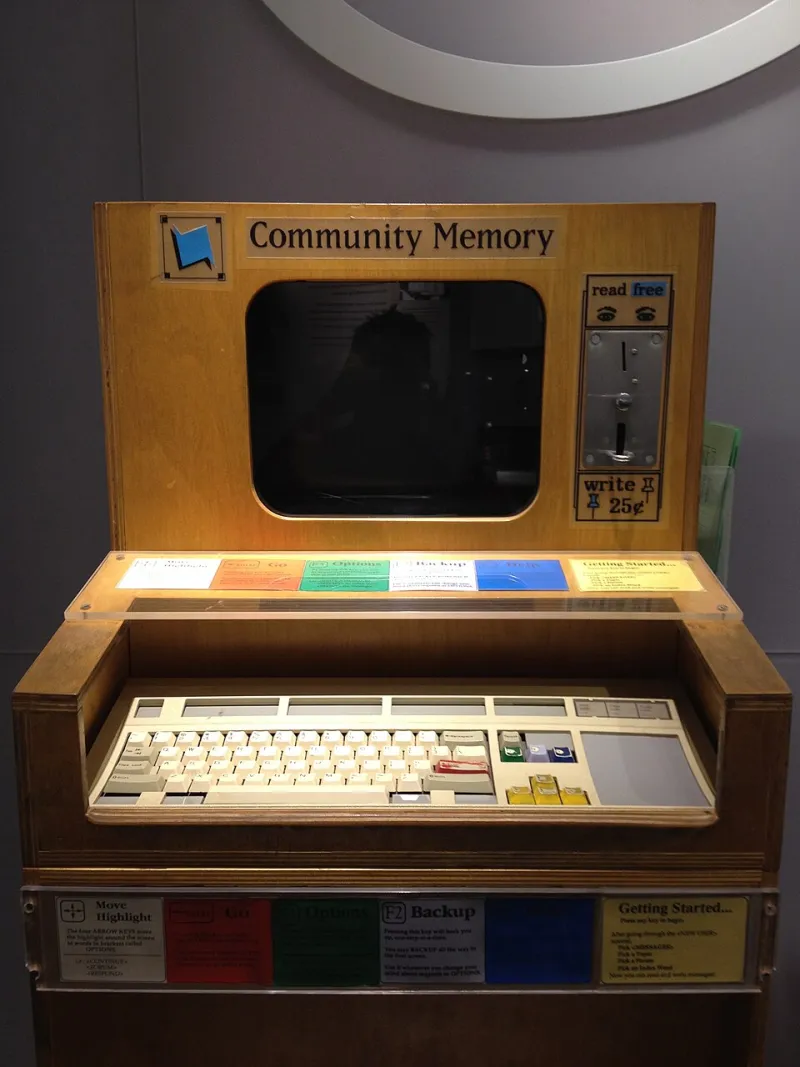
Photo: Kathryn Greenhill, CC BY-SA 2.0, via Wikimedia Commons
In a front room in Govan, a retired teacher has spent the past four years scanning photographs. They are not exceptional photographs in any conventional sense — no famous faces, no dramatic launches, no sweeping panoramas of the river at its industrial peak. They are pictures of street parties, works outings, school photographs, and back-garden gatherings. They are, she explains, the photographs that no archive ever came to collect.
"The big museums wanted the ships," she says. "Nobody came for the people who built them."
That observation, made with more wry pragmatism than bitterness, encapsulates a tension that has run through Clydeside heritage for decades. The river's industrial story has been told, retold, and celebrated — the tonnage launched, the engineering innovations pioneered, the famous vessels whose names became household words across the world. But the human texture of that story, the lives lived in the shadow of the yards, the domestic rhythms shaped by shift patterns and pay packets, the grief of closures experienced not as economic statistics but as neighbourhood catastrophe — that version of events has been far harder to find in the official record.
It is a gap that communities along the Clyde are increasingly determined to fill themselves.
Grassroots Historians and the Community Archive
The impulse to document local life is not new. Community history groups have existed along the Clyde for generations, and organisations such as the Govan Reminiscence Group have been gathering personal testimony since the 1980s. What has changed in recent years is the scale of ambition, the sophistication of the tools available, and the degree to which these initiatives are being taken seriously — and in some cases actively supported — by mainstream heritage bodies.
Digital technology has been transformative. Where previous generations of community historians were limited by the cost and complexity of reproduction, today's volunteers can scan, catalogue, and share materials with relative ease. Local Facebook groups dedicated to historical photographs of Clydebank, Govan, Port Glasgow, and Greenock regularly attract thousands of members, generating a continuous flow of images, anecdotes, and family connections that no funded project could replicate.
These informal networks have become, in effect, distributed archives — fragile and unstructured, perhaps, but extraordinarily rich in the kind of granular, personal detail that institutional collections rarely hold. A photograph shared in a community group might prompt a dozen responses identifying individuals by name, placing the image in a specific street or year, and unlocking chains of family memory that had seemed entirely lost.
Challenging the Official Story
The democratisation of heritage documentation has also created space for more critical engagement with established narratives. Community historians across Clydeside have increasingly questioned whose stories have been centred in the official account of the river's industrial history — and whose have been systematically marginalised.
Women's experience, in particular, has received renewed attention. The yards themselves were overwhelmingly male workplaces, and the heritage industries built around them have tended to reflect that demographic. But the communities surrounding the yards were shaped equally by women: wives and mothers managing households on irregular wages, daughters who worked in the rope works, laundries, and textile factories that formed the broader industrial ecosystem of the river, women who organised rent strikes and mutual aid networks that sustained communities through periods of economic crisis.
Projects such as Hidden Voices, a community-led oral history initiative operating in the Renfrew and Paisley area, have worked specifically to recover these accounts. The resulting testimonies complicate and enrich the standard narrative of Clydeside as a story of male industrial heroism, revealing instead a more textured picture of interdependence, resilience, and domestic ingenuity.
Similar work is being done to recover the experiences of migrant communities who settled along the Clyde and contributed substantially to its industrial workforce — Irish, Lithuanian, Italian, and, from the mid-twentieth century, South Asian and Caribbean communities whose presence in the official heritage record has been, at best, partial.
Living Memory Projects and the Race Against Time
For all the enthusiasm surrounding community heritage work, its practitioners are acutely aware of a fundamental constraint: time. The generation with direct, firsthand memory of the yards at full operation is now in its eighties and nineties. Every year, irreplaceable testimony is lost simply through the passage of years.
This urgency has driven a number of structured living memory projects along the waterfront. The Clydebank-based charity Clydebank Independent Resource Centre has been among those coordinating intergenerational recording sessions, bringing together older residents and younger community members to capture testimony in a format that can be preserved and made accessible to future audiences.
The methodology is deliberately informal. Rather than structured interviews conducted by professional historians, these sessions tend to take the form of guided conversations — relaxed, discursive, and willing to follow unexpected threads. The result is material that feels lived-in rather than curated, full of the digressions, contradictions, and incidental details that formal oral history sometimes smooths away.
"People remember things when they're talking to someone who genuinely wants to listen," explains one project coordinator. "The detail that comes out in a two-hour conversation in someone's kitchen is completely different from what you'd get in a formal interview setting."
Neighbourhood Archives and the Question of Permanence
One of the more pressing challenges facing community heritage initiatives is the question of what happens to the material they generate. Informal networks and community groups are, by their nature, vulnerable to the loss of key individuals, changes in funding, and the simple entropy of voluntary endeavour. Photographs scanned onto a personal hard drive, testimonies recorded on a mobile phone, databases maintained in a spare bedroom — these are not, in themselves, stable long-term archives.
Several community groups have begun working with local authorities and established cultural institutions to find more durable homes for their collections. Glasgow Life, the charitable organisation that manages the city's museums and cultural venues, has developed relationships with a number of community heritage projects, offering digitisation support, archival guidance, and in some cases formal accession of materials into permanent collections.
The relationship is not always straightforward. Community historians sometimes feel that institutional involvement risks diluting the grassroots character of their work, or that materials donated to large collections become inaccessible to the communities that generated them. Navigating these tensions requires ongoing negotiation — but the alternative, allowing irreplaceable community records to disperse and disappear, is generally considered worse.
Heritage as an Act of Belonging
Underlying all of this activity is something that goes beyond the scholarly or the archival. For many of the individuals involved in community heritage work along the Clyde, the act of documenting local history is also an act of asserting belonging — a statement that this place, and the lives lived here, are worth remembering.
In communities that have experienced the dislocation of deindustrialisation, the disruption of large-scale regeneration, and the anxiety of rapid demographic change, heritage can function as a form of anchor. To say "this is what happened here, these are the people who made this place" is, in some sense, to resist the erasure of identity that economic and physical transformation can bring.
The retired teacher in Govan is still scanning photographs. Her collection now runs to several thousand images, each one catalogued with whatever information she has been able to gather from family members, neighbours, and the community networks that have grown up around her project. She has no immediate plans for an exhibition or a formal publication.
"I just want them to exist somewhere," she says. "I want someone, fifty years from now, to be able to see that these people were here."
On a river whose story has so often been told in the language of tonnage and technology, that is a profoundly important ambition.