Listen to the River: Recovering the Lost Sounds of Clydeside's Industrial Age
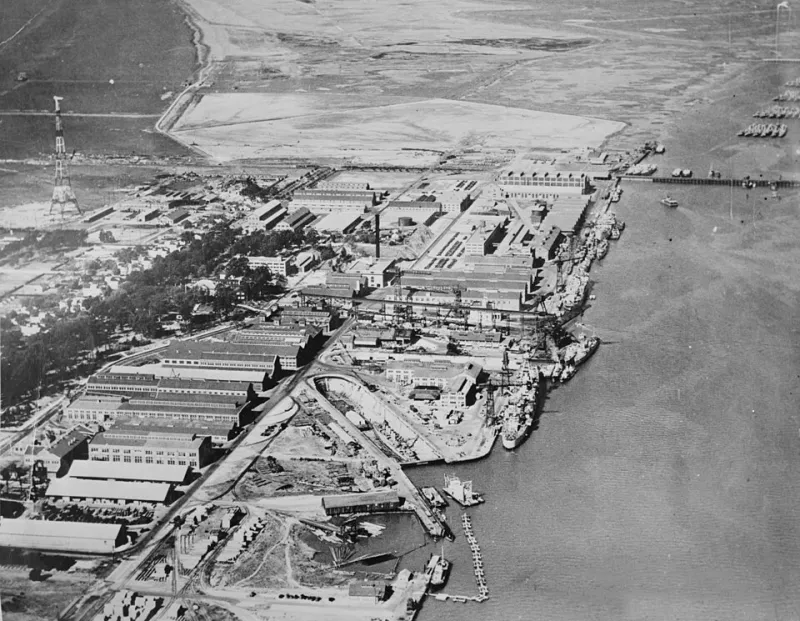
Photo: Clyde Sunderland, Oakland, Public domain, via Wikimedia Commons
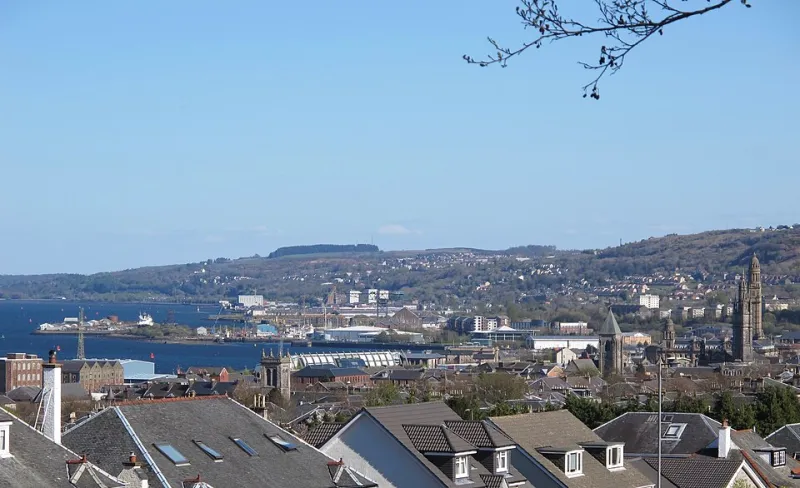
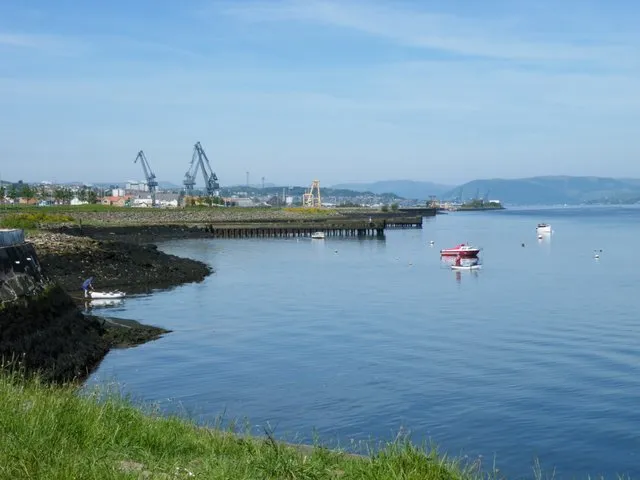
Stand on the south bank of the Clyde today, somewhere between the Riverside Museum and the old yards of Govan, and the dominant sounds are familiar urban ones: the low hum of traffic, the occasional cry of a gull, perhaps the distant percussion of a construction crane. It is, by any measure, a quiet stretch of riverbank. A century ago, it would have been almost incomprehensibly loud.
The industrial Clyde was a place defined as much by its acoustic landscape as by its physical one. The rhythm of the rivet gun, the shriek of metal being cut and shaped, the thunderous surge of a newly launched hull displacing tens of thousands of tonnes of water — these were not incidental background noises. They were the signature of a civilisation, the audible proof that this narrow strip of river was, for a period spanning roughly a century, the most productive shipbuilding corridor on earth.
That era is gone. But the sounds, it turns out, need not be.
The Architecture of Industrial Noise
To understand what has been lost, it helps to understand what the soundscape of a working Clydeside yard actually comprised. Historians and former workers who have contributed to oral history projects consistently describe a layered acoustic environment of remarkable complexity.
At its foundation was the near-constant percussion of riveting gangs. Each gang consisted of four workers — a heater, a catch boy, a holder-on, and the riveter himself — and together they produced a rhythmic, overlapping clatter that, multiplied across dozens of simultaneous gangs on a single hull, became a wall of sound audible miles from the yard. Old-timers describe learning to communicate in the yards through lip-reading and gesture, because conversation was essentially impossible during working hours.
Above that rhythmic baseline came the higher, more irregular sounds of the platers and caulkers, the grind of the angle-iron cutters, the hiss of acetylene torches as welding gradually displaced riveting through the mid-twentieth century. And threading through all of it were human voices — the shouts of foremen, the calls of crane operators coordinating lifts, the sharp whistles that marked shift changes and meal breaks.
Then there were the singular, unrepeatable sounds: the launch. Workers and residents who lived near the yards recall that a major launch — particularly of a passenger liner — drew crowds not merely to watch but to hear. The initial groan of a hull beginning to move, followed by the gathering rush and the enormous detonation of displaced water, was described by one contributor to the Scottish Oral History Centre's Clydeside archive as "like the river itself taking a breath and then shouting."
Why Acoustic Heritage Matters
Heritage professionals have, until relatively recently, tended to focus on the tangible: the preserved cranes, the restored vessels, the brick facades of engine sheds and drawing offices. Sound, being ephemeral, was harder to collect and harder to display. It also lacked the obvious visual authority of a Victorian dry dock or a listed engine shop.
That thinking has shifted considerably. Organisations including the Scottish Maritime Museum, based in Irvine, and various community heritage bodies operating along the river have increasingly recognised that the acoustic dimension of industrial life carries its own irreplaceable historical information. Sound communicates the pace of work, the physical demands placed on workers' bodies, the social hierarchies embedded in who gave orders and who obeyed them. It also carries emotional weight that photographs and ledgers rarely can.
"When someone hears a recording of a riveting gang at full pace, something registers that a written description simply cannot achieve," notes one heritage practitioner involved in digitising archival audio held by a Clydeside museum. "It makes the scale of the labour immediate in a way that changes how people understand the history."
The challenge, of course, is that truly immersive recordings of the yards at their peak are rare. Systematic audio documentation of industrial environments was not a priority in the early to mid twentieth century, and much of what was captured was incidental — industrial films made for promotional or documentary purposes, newsreel footage of launches, the occasional BBC radio programme. These fragments are now being gathered, digitised, and cross-referenced with oral testimony to build as complete a sonic picture as the surviving evidence allows.
Oral History as Acoustic Archive
Where recordings are absent, spoken memory has become the primary vessel for acoustic heritage. Projects such as the Voices of the Clyde initiative, which has gathered testimony from former shipyard workers and their families across the greater Glasgow area, have made a point of asking contributors specifically about sound: what they remember hearing, how they navigated the noise, what sounds they associate with particular events or emotions.
The responses reveal how deeply embedded acoustic memory can be. Contributors describe the specific pitch of a particular yard's horn, distinct from those of neighbouring competitors. They recall the eerie silence that fell over entire communities when a yard went on short time or, worse, when closures were announced — a silence that was, in its own way, as defining as the noise that preceded it.
For younger community members and heritage visitors, these testimonies offer something that no exhibit case can replicate: the sense that the river was once a living, breathing, shouting presence in the daily lives of hundreds of thousands of people.
Bringing Sound Back to the Waterfront
Several heritage sites along the Clyde have begun experimenting with ways to reintroduce acoustic elements into the visitor experience. Immersive audio installations, available through headsets or embedded in physical interpretation panels, allow visitors to hear reconstructed or archival soundscapes while standing in spaces that were once central to the industrial story.
At the Riverside Museum in Glasgow, sound has been incorporated into various gallery environments to contextualise artefacts and vehicles that might otherwise feel static. The effect, according to visitor feedback gathered by the museum, is consistently described as transformative — the objects suddenly acquire a sense of the world they inhabited.
There is also growing interest in what might be called acoustic walking trails: guided or self-guided routes along the riverbank that use location-triggered audio, accessible via smartphone, to layer historical sound onto contemporary space. The idea is not to recreate the past as spectacle, but to give visitors the means to imagine it with greater sensory precision.
A Heritage That Cannot Be Touched
The Clyde's physical heritage — its buildings, vessels, and engineering structures — faces the familiar pressures of maintenance cost, development pressure, and changing land use. The acoustic heritage faces a different kind of fragility: it exists almost entirely in ageing minds and degrading magnetic tape, and neither will last indefinitely without deliberate intervention.
The work of recovering and preserving these sounds is, in that sense, urgent. Every year, the community of people who carry firsthand acoustic memory of the working yards diminishes. Every decade, archival recordings deteriorate further without digitisation. The window for comprehensive acoustic documentation is narrowing.
But the appetite for this kind of heritage is real and growing. Visitors to the Clyde waterfront increasingly seek experiences that go beyond the visual — they want to understand what it felt like to be here, not merely what it looked like. Sound, more than almost any other sensory medium, has the power to bridge that gap.
The river may be quieter now. But it has not yet forgotten how to speak.