Reclaimed by the City: How the Clyde's Derelict Shores Became Living Landmarks
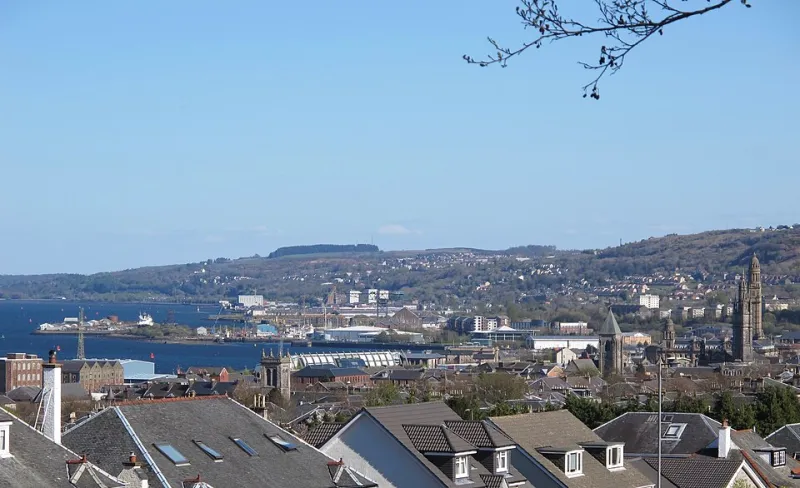
Photo: dave souza, CC BY-SA 4.0, via Wikimedia Commons
For much of the twentieth century, the banks of the Clyde were defined by closure, silence, and the slow decay of an industry that had once shaped the world. Cranes stood idle, sheds fell in on themselves, and entire communities were left to negotiate a future that no longer included the river at its centre. Today, a remarkable succession of regeneration projects has transformed those same shores into spaces that honour the past whilst offering something vital to the present. This is the story of how a river reclaimed its place at the heart of Scottish life.
The Weight of What Was Left Behind
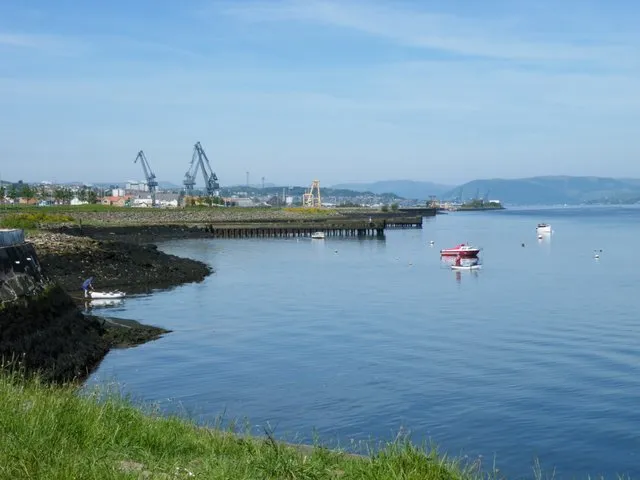
By the 1980s, the scale of industrial abandonment along the Clyde was difficult to overstate. Shipyards that had launched vessels destined for every ocean on earth lay derelict. Warehouses that had once stored the goods of empire stood empty. The waterfront, which had for generations been a place of noise, commerce, and communal purpose, had become a barrier between Glasgow and its own geography.
The challenge facing planners, architects, and community organisations was never simply one of clearance. It was a question of meaning. How do you rebuild a place without erasing the memory of what it was? How do you attract visitors and investment without reducing a living history to a theme park? These tensions have shaped every significant regeneration project along the river, and the most successful of them have navigated those questions with considerable care.
The Riverside Museum: Where Transport History Meets Architectural Ambition
Perhaps no single building better illustrates the ambitions of Clyde regeneration than the Riverside Museum, which opened in 2011 on the site of the former Pointhouse Shipyard in Partick. Designed by the late Zaha Hadid, the structure is immediately arresting — its corrugated zinc roof rises and falls in a series of dramatic peaks that echo, whether intentionally or not, the rhythm of the river itself.
Inside, the museum houses one of the finest transport collections in Europe, celebrating Glasgow's historic role in the manufacture of locomotives, trams, and motor cars. Yet it is the building's relationship to its surroundings that makes it genuinely significant as a piece of regeneration. The museum is not a sealed cultural institution; it opens at both ends, drawing the river in on one side and the city in on the other. The tall ship Glenlee, moored permanently alongside, extends the narrative into the water itself.
Since its opening, the Riverside Museum has drawn well over a million visitors and has won international recognition, including the prestigious European Museum of the Year Award in 2013. For the wider waterfront, it has served as an anchor — demonstrating that world-class cultural infrastructure and heritage preservation need not be competing ambitions.
Pacific Quay and the Science Centre: Regeneration as Civic Statement
A short distance downstream, the transformation of Pacific Quay represents a different but equally instructive model. The former Queen's Dock, which closed in 1977, sat derelict for the better part of two decades before becoming the centrepiece of the city's bid for the 1988 Garden Festival. That temporary event proved a turning point in Glasgow's relationship with the river, drawing three million visitors and demonstrating, perhaps for the first time in the post-industrial era, that the Clyde could be a destination rather than a remnant.
What followed was a longer, more deliberate process of permanent development. The Glasgow Science Centre, which opened in 2001, brought with it the iconic titanium-clad IMAX theatre and the Glasgow Tower — at the time the tallest freestanding structure in Scotland. The BBC Scotland headquarters subsequently relocated to the same site, followed by STV, establishing Pacific Quay as a genuine media and cultural quarter.
The dock basin itself was retained as a water feature at the heart of the development, a decision that now reads as quietly prescient. It preserves the memory of the site's industrial function whilst creating a focal point for public life that feels entirely contemporary.
Govan: Heritage at the Forefront of Renewal
Not every regeneration story along the Clyde is centred on completed, polished outcomes. In Govan, the process is ongoing, and all the more interesting for it. The former Harland and Wolff shipyard — where, before Belfast, some of the most celebrated vessels in maritime history were constructed — has been the subject of sustained regeneration efforts that place heritage preservation at their core.
The Govan Graving Docks, three Victorian dry docks dating from the 1870s, represent one of the most significant surviving examples of nineteenth-century maritime infrastructure anywhere in Britain. Campaigns to secure their future have gathered considerable momentum in recent years, with proposals for a mixed-use cultural and community space that would retain the docks' extraordinary physical character. The project has attracted the attention of Historic Environment Scotland and has become a focal point for broader conversations about what regeneration in working-class communities should actually look like.
Nearby, the Fairfield Heritage centre — based in the former offices and boardroom of the Fairfield Shipbuilding and Engineering Company — offers visitors a remarkably intimate encounter with the social history of Clydeside labour. The boardroom, preserved largely intact, provides a striking contrast to the workers' experience documented in the exhibitions below. It is heritage tourism at its most unvarnished and, for that reason, at its most compelling.
The Clyde Walkway: Stitching It All Together
What gives the individual regeneration projects along the river their cumulative power is the Clyde Walkway, the long-distance path that connects Glasgow to the Falls of Clyde in Lanarkshire. Within the city, the riverside path links many of the waterfront's most significant sites, offering a continuous pedestrian experience that would have been physically impossible forty years ago, when private industrial land dominated the riverbanks.
The walkway is not merely a practical amenity. It is a statement about access — about the right of ordinary people to walk alongside a river that was, for most of its industrial history, closed to them. In that sense, it may be the most democratically significant piece of regeneration infrastructure the Clyde has seen.
A Work Still in Progress
It would be misleading to suggest that the regeneration of the Clyde waterfront is a finished story. Large stretches of the river remain underdeveloped, and questions about community benefit, affordable housing, and equitable access continue to be raised by residents and campaigners. The tension between heritage preservation and commercial development has not been resolved so much as renegotiated, project by project.
What has changed, irrevocably, is the river's place in the city's imagination. The Clyde is no longer something Glasgow turns its back on. It is, once again, the reason people come.