Still Waters, Silent Hulls: The Abandoned Vessels That Refuse to Leave the Clyde
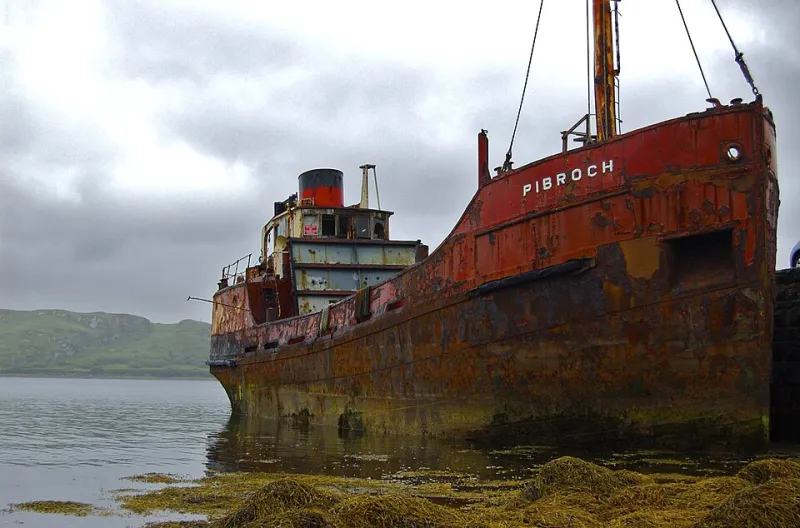
Photo: Rob Fahey, CC BY-SA 2.0, via Wikimedia Commons
The River That Never Quite Let Go
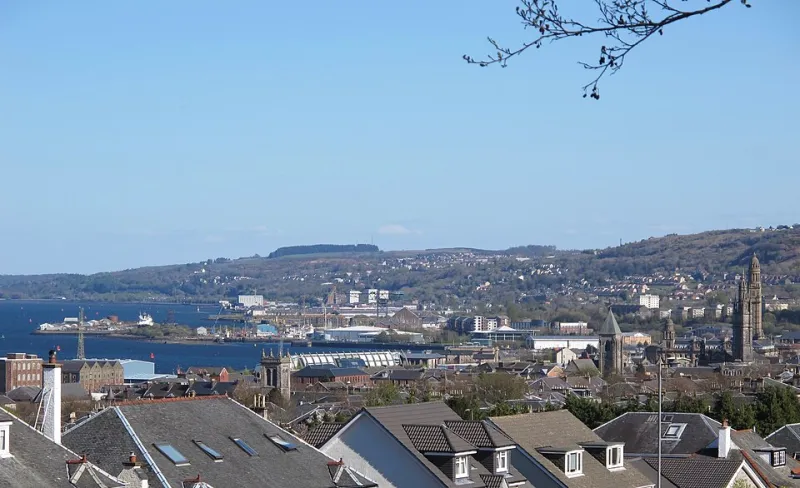
There is a particular quality to the light on the lower Clyde on an overcast morning — flat, silver, and entirely indifferent to the passage of time. It is the kind of light that makes a rusted hull sitting low in the water look less like an eyesore and more like a monument. For those who know where to look, the Clyde remains home to a scattered, unofficial fleet: vessels that were never formally retired so much as simply left behind, their paperwork long since dissolved into bureaucratic obscurity, their hulls growing slowly into the riverbed.
These are the ghost ships of the Clyde — and they are drawing a quietly devoted following.
What Remains When the Yards Fall Silent
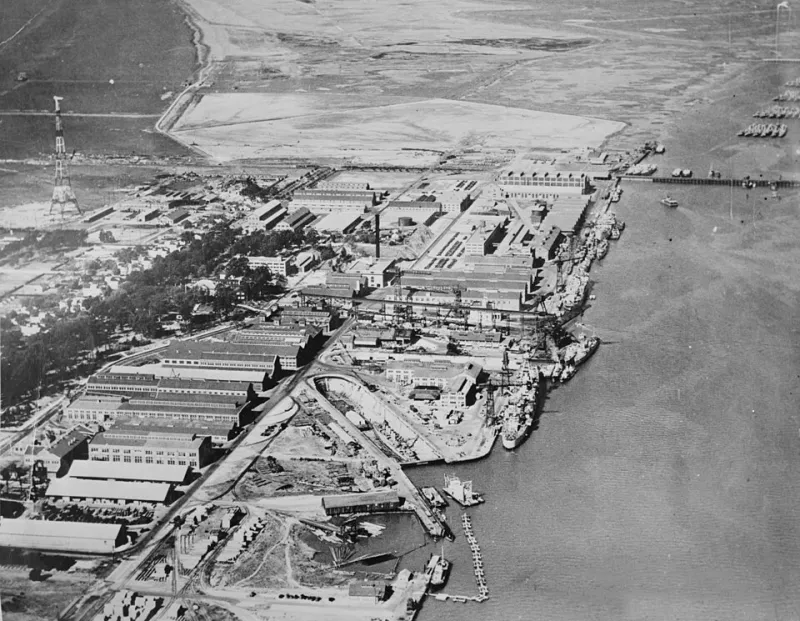
At its industrial peak, the Clyde launched more than a third of the world's shipping tonnage. The yards at Govan, Clydebank, Greenock, and Port Glasgow produced everything from ocean liners to naval destroyers, and the river itself was perpetually crowded with vessels in various stages of completion, fitting-out, or transit. When the industry contracted sharply through the 1970s and 1980s, the infrastructure did not simply vanish — it lingered, in the form of derelict cranes, abandoned dry docks, and, most evocatively, vessels that had outlived their commercial purpose but found no route to formal disposal.
Some of these craft are well documented. Others have slipped quietly from the official record, known now only to local historians, salvage enthusiasts, and the occasional kayaker who rounds a bend and finds something unexpected blocking the view.
Douglas Ferrier, a retired marine engineer and founding member of the Clyde Maritime Salvage Society, has spent the better part of two decades cataloguing what he calls 'the unacknowledged fleet.' Speaking from his workshop in Port Glasgow — its shelves crowded with nameplates, telegraph mechanisms, and rolled technical drawings — he describes the work with a mixture of urgency and resignation.
'Most people assume that when a ship disappears from the Lloyd's register, it's gone,' he says. 'But the Clyde is full of craft that just... stopped being anyone's responsibility. A floating pontoon here, a dredger there. A passenger ferry that served the Gourock run until the mid-eighties and then sat at a private mooring for thirty years. They accumulate.'
A Guide to the Clyde's Maritime Remnants
For visitors interested in encountering these spectral presences firsthand, several locations merit particular attention.
Bowling Harbour, at the western end of the Forth and Clyde Canal, shelters a collection of decommissioned vessels that range from former work barges to a partially dismantled puffer — the distinctive shallow-draught cargo boats that once served the West Highland trade. The harbour itself is freely accessible, and the vessels visible from the towpath offer an unusually concentrated glimpse of mid-twentieth-century river commerce.
The Garvel Dry Dock at Greenock, though now operated in a limited capacity, retains the bones of several craft awaiting decisions that may never come. The surrounding area, part of the wider Harbours regeneration zone, allows pedestrian access and has become an informal destination for photographers drawn to the interplay of decay and industrial geometry.
The upper reaches near Dumbarton occasionally reveal the timber ribs of older vessels exposed at low tide — remnants of a tradition of 'grounding' worn-out craft on mudflats that was common practice well into the twentieth century. These skeletal outlines, visible for only a few hours during spring tides, have acquired a following among heritage photographers and are occasionally marked on specialist walking guides to the area.
Salvage as Scholarship
The enthusiasm surrounding these remnants is not purely aesthetic. For organisations such as the Scottish Maritime Museum in Irvine, which holds one of the most significant collections of Clyde-built vessels still afloat, the ghost ships represent an archival resource of considerable value — and considerable fragility.
'Every vessel that deteriorates beyond recovery takes irreplaceable material culture with it,' explains the museum's collections manager, who has worked with volunteer groups to document several at-risk craft in recent years. 'We are not talking only about the physical fabric — the riveting patterns, the joinery, the engine configurations — but about the social history embedded in those objects. A ship's log, a crew's mess kit, a painted name on a life ring. These things matter.'
Ferrier's society has pioneered a methodology for rapid condition surveys, training volunteers to produce standardised photographic and structural records before deterioration renders a vessel unsalvageable. The resulting archive, now housed partly with the National Records of Scotland and partly maintained digitally, documents more than sixty craft identified along the Clyde and its tributaries since 2004.
Between Ruin and Revival
Not every ghost ship is destined for continued decline. Several of the Clyde's most visible derelict vessels have attracted regeneration interest in recent years, with heritage bodies and local authorities exploring adaptive reuse models that have proved successful elsewhere in the UK — most notably in the conversion of historic vessels into floating visitor centres, youth training facilities, and community arts spaces.
The challenge, as those involved in these discussions readily acknowledge, is financial. The cost of stabilising and converting a deteriorating vessel frequently exceeds conventional heritage funding thresholds, and the legal complexities of ownership — particularly where vessels have passed through multiple hands or been effectively abandoned — can make even preliminary planning a protracted exercise.
Yet the appetite exists, and it is growing. Social media communities dedicated to industrial heritage have brought a new and younger audience to the subject, with images of the Clyde's rusting hulks circulating widely among those who find in post-industrial decay a particular kind of visual poetry. Whether that aesthetic interest can be converted into sustained advocacy — and ultimately into the resources needed to preserve what remains — is the question that preoccupies heritage professionals along the river.
What the Hulls Still Carry
Standing at Bowling on a quiet weekday, watching the tide shift around the moored remnants of the puffer trade, it is not difficult to understand the hold these vessels exert. There is something in the scale of them — too large to ignore, too damaged to use — that insists on acknowledgement. They were built by named workers in named yards, launched before crowds, and committed to specific purposes that once seemed entirely permanent.
The river carries its history unevenly. The grand narratives — the liners, the warships, the engineering triumphs — have their museums and their commemorative plaques. It is the quieter stories, preserved in rust and waterlogged timber, that the ghost ships still hold. For now, at least, they remain.